



I came across this wonderful description of reading Karl Barth as an antidote to feeling desultory (the OP uses it as a verb: desultorying). It was posted by Jim Gordon on his blog a while back.1 I certainly identify with this experience of reading Barth.2

Gordon says:
Barth is one of a few theologians who provide (for me at any rate) a theological and spiritual antidote to the debilitating condition of desultorying. Loss of impetus, boredom with transcendence, spiritual attention deficit, emotional reductionism, theological complacency—there are plenty of phrases and they describe some forms of desultorying. Nearer where I am just now is something different—experience overload, much happening at once and the need to have time, space and energy to work through what it means, how it feels, and how best live with and through life as it is.
In her wonderful Journal of a Solitude, May Sarton wrote something I adopted as a spiritual principle. She spoke of the depletion that comes from “unassimilated experience“—she meant those times when life is too stridently demanding, expectations of ourselves are unrealistic, too much happens before previous experience is reflected upon, learned from, made peace with.
One way of interrupting the flow of information, experience and circumstance is to change the subject away from yourself to that which is beyond, more than, extrinsic to, our own inner world with its worries, problem solving, calculation and self-centred attention. Open a volume of Barth, and I find myself interrupted! Romans 8 belongs in the Alpine range of Paul’s theology, and Barth on Romans 8 in his commentary provides a stunning viewpoint to take in the vast vista and far away horizons of the love of God in Jesus Christ. Is it an exegesis of Romans 8? Absolutely not,3 more like a conductor inspiring an entire orchestra to improvise with passionate responsiveness to the composer’s musical vision, and therefore to treat the script with such massive respect that it is not slavishly followed but teleologically fulfilled. The result is an artistic triumph, a virtuoso performance that is unique and arises out of the specific coincidence of musicians, conductor, musical score and historical moment. Barth’s Romans is like that.
Lifted Out of Ourselves
This is a beautiful description of the experience of reading Barth. I can think of numerous passages in Barth that jolt me out of myself by confronting me with the unimaginable love and freedom, the grace and humility, of God that elicits astonishment and joy. Barth, in one place, describes faith as “awe in the presence of the divine incognito.”4 In other words, one sure marker of the experience of the “linking” power of faith5 is finding yourself saying “wow!” (rather than a skeptical “how?”) when reading about what GOD has done FOR US. Anything God does is good—something Plato already knew.6 Jews and Christians would add that it is also perfect and incredible (Deut. 32:4, Matt. 21:42), for what God does is simply “God.” As one of my professor says: God “gods” (verb).
I also experience deliverance from desultorying in reading Watchman Nee, who shares a number of similarities with Barth despite their obvious differences.
Nee’s solution to desultorying or despondence is to look away from your self to the author and perfecter of our faith (Heb. 12:2). Nee says,
All kinds of introspection, self-analysis of our own feeling, self-consideration of our own progress, or even excessive concern about our own spirituality will hinder our progress. One of the greatest dangers in running the race lies in a subconscious introspection in the runners due to their anxiety over progress… Blessed are those who do not look at themselves.7
Both theologians lift me out of myself into the awe and adoration of the divine realities revealed and accomplished in Christ. Both constantly have me saying “wow.” Both move me to tears, which surely is a mark of true theologian.

Reading in the Age of AI
In the age of AI, when knowledge is cheap but thinking the true, experiencing the beautiful, and living out the good are rare, building up the experience of actually READING theologians at length—until you become, in some sense, their spiritual children and intellectual friends—is crucial. Knowledge alone does not transform you (even if it is “power,” possibly a dangerous power, especially these days). Reading a theologian is a completely different experience from asking ChatGPT for answers to theological questions.
Even when ChatGPT tells you accurately what Barth thinks (can it?), it cannot give you the experience of being transported by Barth. In reading a theologian at length, you leave intellectual footprints in their work so that you remember the experience of “seeing” the vista they led you to. Reading produces real experiences, and experiences shape and transform you. Getting answers from AI doesn’t do that, even if those answers are accurate. Merely acquiring answers lets you do something with information; reading does something to you.
Accurate information about theology is a very poor substitute for the experience of reading about and being swept up in the theo-logic of our Triune God—just like reading a description of the Grand Canyon can never take the place of actually seeing it from the edge of the South Rim.

And I think the writings of Barth—or for that matter, Watchman Nee and Witness Lee—are like the Grand Canyon: vast, inspiring, difficult to get a real grasp of the whole, wild, winding and deep, tricky to get to the bottom of, but always impressive even if dangerous or slippery in places. It is easy to reduce it to a postcard, but the postcard neither captures nor conveys the reality. Like a picture taken with a cheap camera, it loses depth and perspective; it comes out one-dimensional and unimpressive. Or it’s distilled into cheap summaries without nuance or sparkle.
Through the Wardrobe
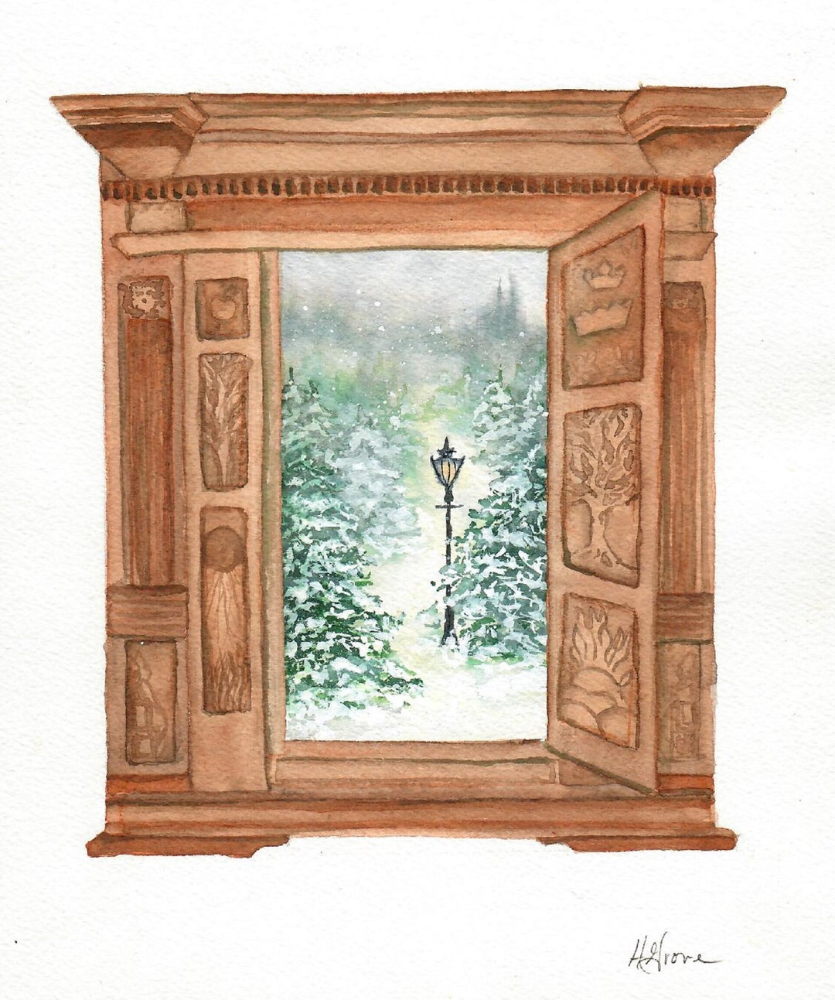
The great theologians are not merely repositories of theological information, encyclopedic entries, or yes/no answers. The goal is never “answers” simpliciter, but encounter with the reality to which the answers point. Katherine Sonderegger pushed back against Bruce Marshall on this point once as she responded to his critique of Barth: “It does not seem to me that ‘answers’ are an exhaustive form of proper Christian teaching.” 8
The best theologians don’t just give you black and white answers, an approach that slouches toward manualism, something yellow-pages theology or magic-eight ball theology; instead, they function like the deep wardrobe into Narnia. They do not merely tell us that another world exists; they lead us through the entrance. And the experience on the other side—the startling crunch of snow beneath your feet, the sudden feeling of cold on your now rosy cheeks, the bewilderment of encountering strange, impossible creatures—cannot be replaced by even the most accurate description.
After all, theology is, as Barth put it, “the logic of wonders,” because “Christ is that infinitely wondrous event which compels a person, so far as he experiences and comprehends this event, to be necessarily, profoundly, wholly, and irrevocably astonished.”9
Why would we trade wonder for easy answers from AI?
AI can’t rescue us from desultorying nor can it bring us into Narnia, the strange new world of the Bible that we enter through our mingled spirit.
- It seems like Jim’s blog, “Living Wittily,” is no longer available online. I am very glad that I saved this quote a number of months ago. Let it serve as a tribute to Jim unless and until his blog resurfaces. ↩︎
- My former professor George Hunsinger would agree too. He once cited three reasons why he kept reading Barth. See Hunsinger, “How to Read Karl Barth: Preface to the German Edition,” in Evangelical, Catholic, and Reformed (2015), 298: “I keep reading him because I keep learning from him. I find that the more I know, the more he has to teach me. I also find that when I feel depressed, he cheers me up!” ↩︎
- For a different view, see Beverly Gaventa, “‘In your light, we see light’: The Scripture Principle in Karl Barth’s Göttingen Dogmatics,” in Karl Barth and Reformed Theology: Tradition, Dialogue, and Construction (2025), 166: “I am convinced that Barth’s Römerbrief is in fact a commentary, a book with much to teach us about Paul and Paul’s letter; it is not only a work of dogmatics or theological reflection on the way to dogmatics. Time and again, as I have worked through Barth’s commentary alongside Paul’s letter, I have learned something about Romans itself.” ↩︎
- Bart, Romans, 39. ↩︎
- See Lee, CWWL 1994–1997, 1:307f.
↩︎ - Plato, Republic, Bk 2, 379b ↩︎
- Nee, CWWN, 17:236 ↩︎
- See Sonderegger, “A Farewell to All That,” in Pro Ecclesia 31.4 (2022), 562. ↩︎
- Barth, Evangelical Theology, 66, 71. ↩︎


