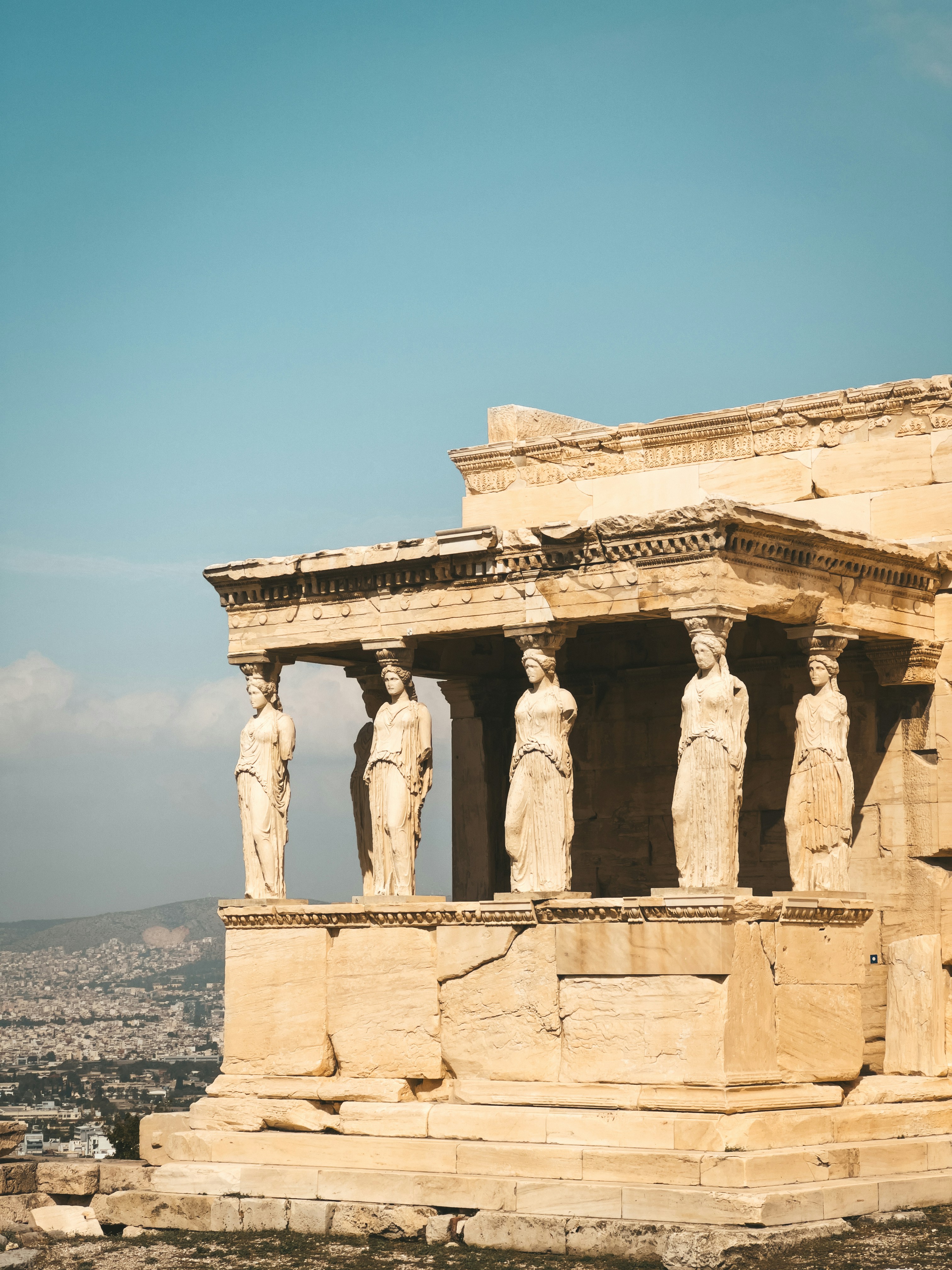


Read allegorically, the closing verses of Psalm 144 provide a balanced series of petitions for the life and flourishing of God’s people under God’s blessing—a litany for the Church.
In the Recovery Version, Psalm 144:12-15 reads:
May our sons be like plants
Grown up1 in their youth;
May our daughters be like corner pillars2
Hewn out in fashion for a palace;
May our barns3 be full,
Furnishing produce of all kinds;4
May our sheep bring forth thousands
And ten thousands in our fields;
May our oxen be fully laden;5
May there be no breaking in to rob or going forth to fight,
Or outcry in our streets.
Blessed are the people who are so.
Blessed are the people whose God is Jehovah.
We shouldn’t pray these verses in a prosperity gospel mindset, where “Lord, give me 10,000 sheep!” (v. 13) would be the ancient equivalent of “Lord, make me a millionaire!”6 Perhaps, however, this is simply a metaphorical expression suggesting “the glorious expectation of the kingdom of God on earth”7 following the eschatological victory of the Messianic David. Or maybe it is simply an expansive and bold petition that trusts in God’s abundant provision, such as Luther’s expansion of the fourth petition of the Lord’s prayer: “Give us this day our daily bread.”8 Either way, we can confidently pray these verses9 as New Testament believers by applying them to Christ and the church according to the spiritual realities they signify.10
The original sense concerns the material prosperity and peace of Israel. Yet Christians have long read the Psalms as the prayers of the totus Christus, finding in Israel’s blessings a figure of the church’s spiritual prosperity. Prayed in this way, Psalm 144:12–15 becomes a beautiful intercession for the life of the church.
As Witness Lee observed, many Christians find it “often difficult to know how to pray, what to pray for, and with what words to pray.” His recommendation was to use the words of the Bible to fuel and guide our prayer. He said, “In the Bible we have the proper words with which to pray,” for the Bible is “a long prayer book.”11
These verses can be formatted as Suffrages (from the Latin, suffragium: a vote, support, or intercession), which refer to petitions offered on behalf of others or for the needs of the church and world.
The Book of Common Prayer offers these Suffrages for morning prayer:
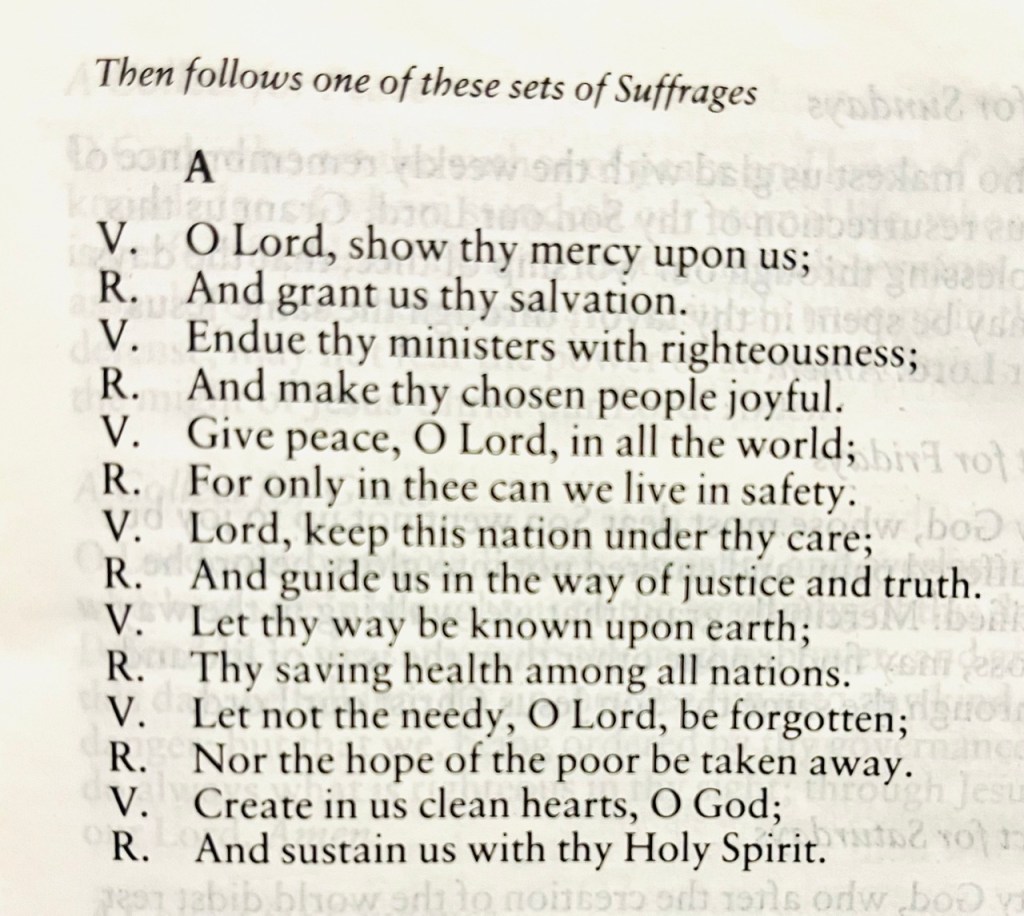
Here is how formatting Psalm 144 like that could look:
V. May our sons be like plants grown up in their youth;
R. Grant that our young people may grow in faith and every Christian virtue.
V. May our daughters be like corner pillars hewn for a palace;
R. Establish the saints in beauty, dignity, and strength for Your house.
V. May our storehouses be full, dispensing food of every kind;
R. Fill the ministry among us with every kind of life supply.
V. May our sheep bring forth thousands and ten thousands;
R. Bless the preaching of the gospel with abundant increase.
V. May our oxen be fully laden;
R. Strengthen, O Lord, the service of Your church to bear every burden faithfully.
V. May there be no breaking in or going forth;
R. Preserve Your people from every attack and destructive influence.
V. May there be no outcry in our streets;
R. Keep us in peace and in the one accord of Your Spirit.
V. Blessed are the people who are so.
R. Blessed are the people whose God is our Lord.
My point is not that these verses must be prayed in a formal liturgical manner. Rather, the form simply provides a framework for expansion. They furnish a set of concerns to carry before God when praying for the church. Instead of praying only in generalities12 (“Lord, bless Your church”), Psalm 144 gives us concrete categories for Spirit-directed intercession according to our burden and feeling.
These verses give us the categories of:
- The church’s young people
- The church’s ministry of life
- The church’s gospel work
- The church’s practical and priestly service
- The church’s preservation and protection
- The church’s peace and one accord
- The church’s blessedness under God
I hope you try praying for the church based on this Psalm! When I read it in my church’s daily lectionary, I was struck by how naturally these verses lent themselves to this kind of prayer.
- BCP 1979: “nurtured.” ↩︎
- I.e., caryatids. See the famous ones at the Erechtheion temple in Athens here. ↩︎
- NET: “storehouses.” For those in the CLC, this word will remind them of the typology of Joseph’s storehouses; see Lee, CWWL 1984, 5:110-11. ↩︎
- Robert Alter: “dispensing food.” This calls to mind Lee’s dominant use of the idea of God’s dispensing. ↩︎
- KJV: “strong to labour.” ↩︎
- Job only had 7,000 sheep and “Job’s wealth was staggering,” and he had “enormous herds.” See John E. Hartley, The Book of Job, NICOT (Wm. B. Eerdmans, 1998), 68. ↩︎
- Samuel Terrien, The Psalms: Strophic Structure and Theological Commentary (Wm. B. Eerdmans, 2003), 901. ↩︎
- Luther, Large Catechism. ↩︎
- Witness Lee teaches that we should pray and pray-read the Psalms; see, e.g., CWWL 1968, 1:469. ↩︎
- See Lee, CWWL 1969, 3:6: “In all our praises we must have the sentiments and impressions gathered from our experience; yet in all our praises we must have Christ and the church as the center and content.” ↩︎
- Lee, CWWL 1967, 1:515. ↩︎
- See Hymns (LSM) #1178: “Be specific for reality! / And be done with generality!” ↩︎