This post developed out of a comment I left on Kevin DeYoung’s recent post on Why Lewis Loved the Law.

This post developed out of a comment I left on Kevin DeYoung’s recent post on Why Lewis Loved the Law.




All public architecture… has significance beyond its mere utility.
-Spiro Kostof
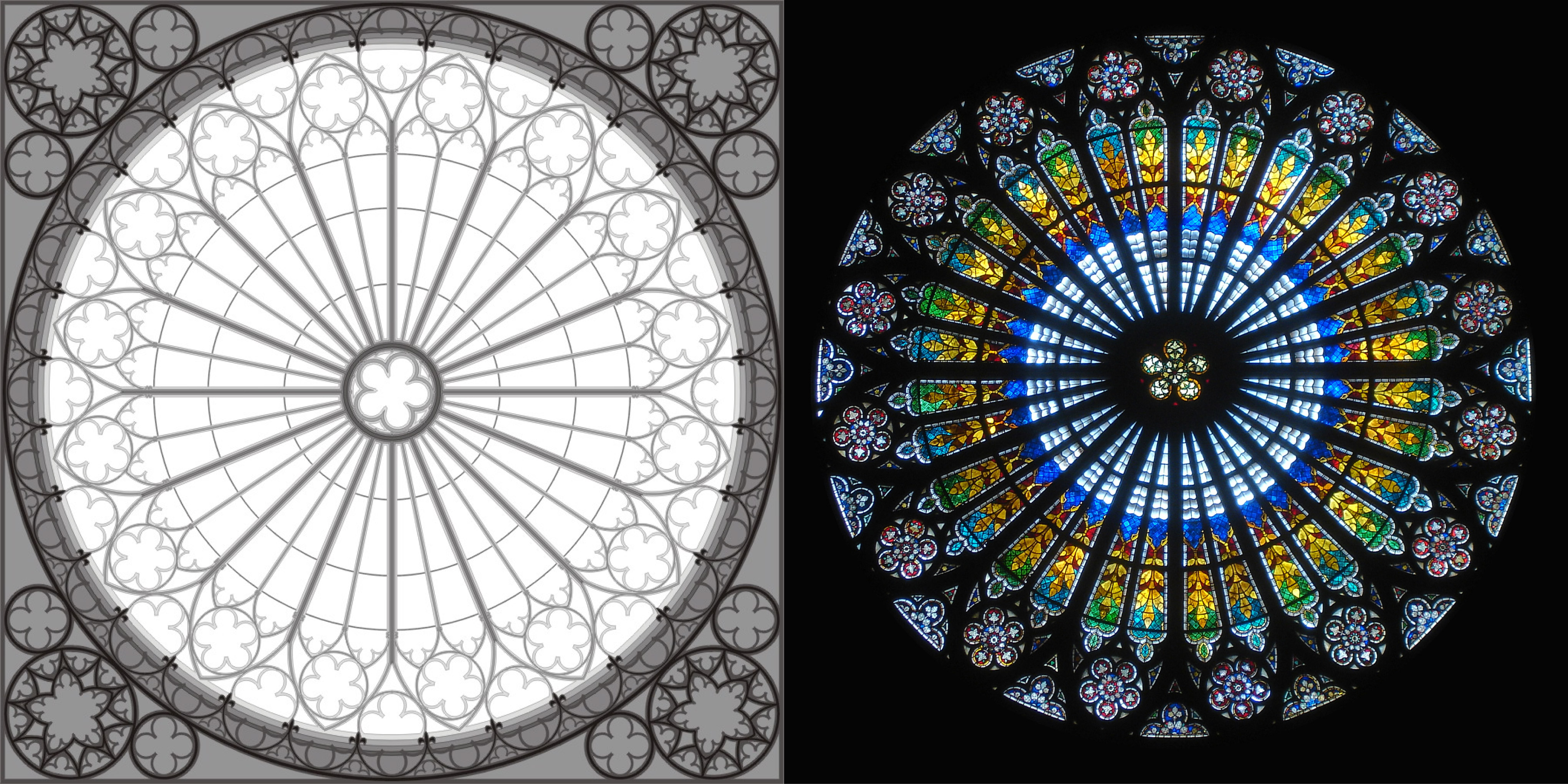
Near the middle of the 12th century, a new philosophy in France challenged the Romanesque precedent of self-denial and austerity. Under the banner of Abbot Suger’s lux nova (God is light) dogma and with the cathedral as a sort of political battle cry, the Gothic style became an intellectual and innovative charge. The impetus was religious and national, and vouched for the new found allegiance of church and state; therefore, the marvel and beauty of the facades of these cathedrals advertised the prosperity and ascendancy, the sickle and the scepter, of the city. These large basilica churches built during the 11th-14th centuries present more than functional solutions to township or religious needs. They are symbols in stone.

 A symbol of the city, a dramatic transport, and a commentary on man

 There is a dynamic interplay in the story of Noah that has intrigued me recently.
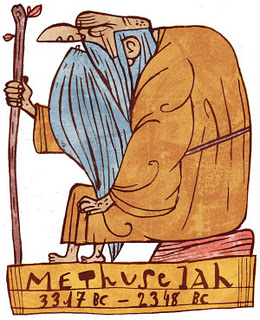
Methuselah’s age as recorded in the Bible has become the stuff of trivia, factoid, debate. But have you ever wondered why he was the one who lived the longest?
Methuselah’s name is significant. It means, “when he dies, it will be sent.” The it, of course, being the flood. This means that Noah wasn’t the only one to get the revelation concerning the destiny of the world. His great grandfather Enoch did too. Once Enoch saw this revelation, he began to walk with God.
It has the power to radically alter our life habits, to the point where our friends may wonder if we are the same person as before.
Noah in a sense inherited the revelations of the godly men before him. Noah was born into something that was already set in motion by God. He came on the scene right in the midst of it. Then God came in and revealed the situation to him and also the way of salvation.
That must have been a decisive moment in his life. The impact of the revelation must have been staggering. To put it in Watchman Nee’s words, he saw “a world under water.” How could he live the same? In a sense, that moment defined him. His life could be dived by the before and after. This revelation produced a deep inward realization about everything.

We’re all guilty of doing it.
It’s easy to reduce God to a magic eight ball.
As we approach crossroads in life, we remember, “Oh yeah, I’ve got God.” So we ask our question, shake really hard, and optimistically turn our magic 8 ball over.
Don’t reduce God to a computational machine.
But you may say, “What about knowing God’s will for me? What about knowing what I’m supposed to do? What school to go to? Who to marry?” These are all legitimate concerns no doubt. But they are not all there is to God.

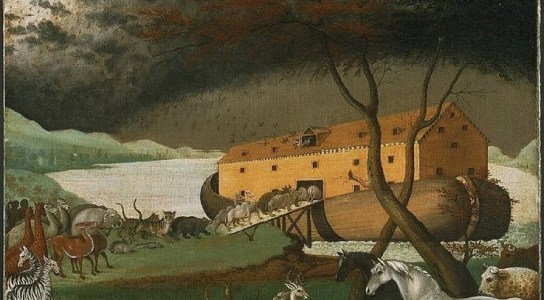
Recently I’ve been considering the mission of the church from the lens of Noah’s life and work.
Jesus Himself reveals how relevant the story of Noah is today.
For just as the days of Noah were, so will the coming of the Son of Man be. –Matt. 24:37
Noah’s living and work parallels and prefigures the critical aspects of the church’s mission in view of Christ’s return.


 This has been a tumultuous year.
The events of December 18, 2010 set off the Arab Spring nearly on the eve of the new year. The distrust, disgust, and dissatisfaction with the current economic, political, and social conditions quickly spread throughout much of the Middle East and North Africa.
Tunisia and Egypt both ousted their long-standing presidents and overthrew the governments (Ben Ali for 24 years and Mubarak for 30 years). Libya erupted in civil war resulting in the fall of its long-standing regime under Gaddafi for 42 years.
Of course Uncle Sam has been reeling with his own financial problems and political dissidence. People are unemployed, foreclosed upon, living with little or no health insurance, and in major debt. They are the 99%.


If John 3:16 is the most famous verse in the New Testament, what some have endearingly called the “end zone gospel”, then the verses of Psalm 23 must be the Old Testament equivalent.
With soldiers, guidance counselors, and everyone dealing with difficult situations of loss or discouragement, this chapter surely has been flipped to.
Psalm 23 presents Christ as the Shepherd. What could be more comforting? In this Psalm there are 18 personal statements- my Shepherd, I will lack nothing, He makes me lie down, etc.
We will never graduate from our need of Christ’s personal shepherding. Jacob’s life testifies of this- near his end he recognized God as the One who had shepherded him his whole life (Gen. 48:15). Even for eternity the Lamb will shepherd us to springs of water of life (Rev. 7:17).
But eventually our Christian life needs to turn to shepherding others.

 Of all the books of the Bible, none other tops the Hot 100 chart more consistently than Psalms.
The Psalms are inspiring, poignant, prophetic, and personal. They span history, prophecy, and theology in one swoop. They reveal both the height of divine majesty and the depth of human depravity. They’re used for prayer, praise, meditation, and devotion.
But what are they all about?

 It has been a month since Steve Jobs’ death. The talking heads have had their lime light, the biography has been released, and the tributes have been turned down to a simmer.
Before this passes out of the realm of current events and sinks into the internet’s vast catalog of oblivion, I want to make one more observation on Steve Jobs’ life.
The absence of an on-off switch on Apple devices is more than a design feature. It’s a life philosophy. It has been said that Steve Jobs didn’t put on-off switches on his products because he didn’t like the thought that at the end of a successful, influential life a person is just gone- put eternally in the off position.
“Ever since I’ve had cancer, I’ve been thinking about (God) more. And I find myself believing a bit more. Maybe it’s because I want to believe in an afterlife. That when you die, it doesn’t just all disappear,” Isaacson quoted Jobs as saying.
“Then he paused for a second and he said ‘yeah, but sometimes I think it’s just like an on-off switch. Click and you’re gone,” Isaacson said of Jobs. “He paused again, and he said: And that’s why I don’t like putting on-off switches on Apple devices.”


