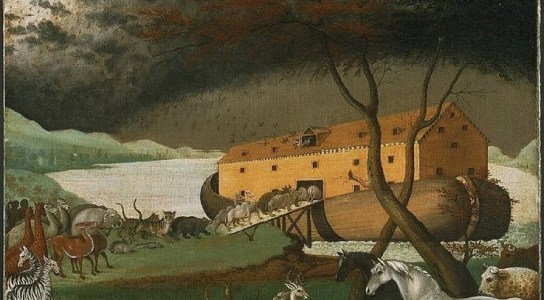
Perspective on the Mission of the Church: Noah

Recently I’ve been considering the mission of the church from the lens of Noah’s life and work.

Jesus Himself reveals how relevant the story of Noah is today.

For just as the days of Noah were, so will the coming of the Son of Man be. –Matt. 24:37

Noah’s living and work parallels and prefigures the critical aspects of the church’s mission in view of Christ’s return.

Continue reading

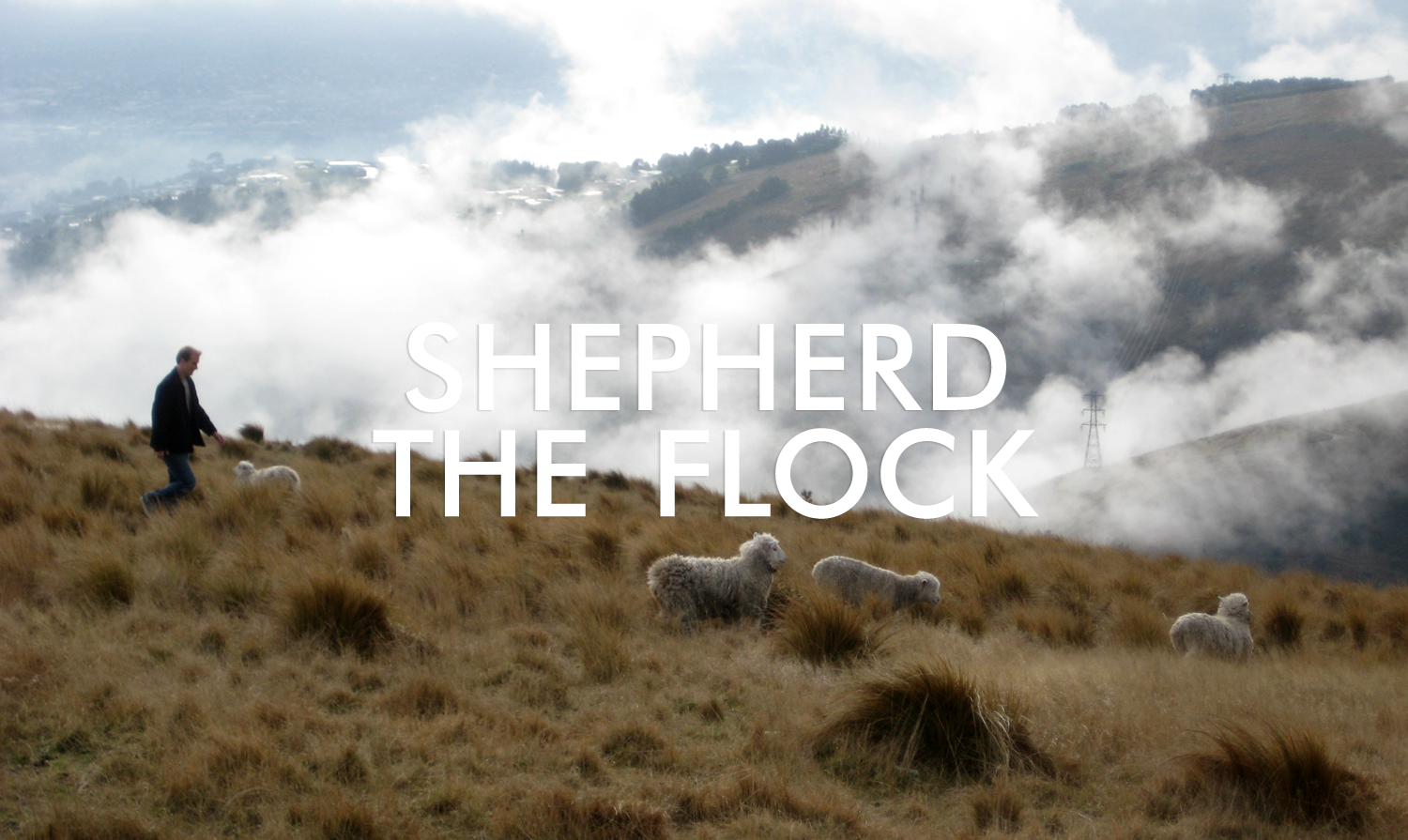
Psalm 23: From Failure to Shepherding

shepherding

If John 3:16 is the most famous verse in the New Testament, what some have endearingly called the “end zone gospel”, then the verses of Psalm 23 must be the Old Testament equivalent.

With soldiers, guidance counselors, and everyone dealing with difficult situations of loss or discouragement, this chapter surely has been flipped to.

Enjoying Christ as our Shepherd

Psalm 23 presents Christ as the Shepherd. What could be more comforting? In this Psalm there are 18 personal statements- my Shepherd, I will lack nothing, He makes me lie down, etc.

We will never graduate from our need of Christ’s personal shepherding. Jacob’s life testifies of this- near his end he recognized God as the One who had shepherded him his whole life (Gen. 48:15). Even for eternity the Lamb will shepherd us to springs of water of life (Rev. 7:17).

But eventually our Christian life needs to turn to shepherding others.

Continue reading

The Central Thought of Psalms in Four Words

Of all the books of the Bible, none other tops the Hot 100 chart more consistently than Psalms.

The Psalms are inspiring, poignant, prophetic, and personal. They span history, prophecy, and theology in one swoop. They reveal both the height of divine majesty and the depth of human depravity. They’re used for prayer, praise, meditation, and devotion.

But what are they all about?

Continue reading

Three Ways of Knowing God

As Christians we are seeking to know God, but in what way or to what degree?

“He made His ways known to Moses; His acts, to the children of Israel.” -Psalm 103:7

God’s ways are different from His acts. His acts are His activities; His ways are the principles by which He acts. The children of Israel knew only His acts, but Moses knew His ways (Psa. 103:7).

-footnote on Hebrews 3:10, Recovery Version

Continue reading

How does God move?

The kingdom of God was the central message in Jesus’ earthly ministry. The Gospel of Matthew particularly highlights this aspect of the Lord’s teaching, mentioning the kingdom 55 times. Luke follows closely behind at 44 times. God’s move is to bring His kingdom to the earth. The book of Acts, a book on God’s move, begins and ends with the kingdom (1:3, 28:31).

So how does that actually happen? How does the kingdom of God come?

Continue reading

The Must of Regeneration and the Meaning of Life

Recently I read an article in the NY Times called, “The Meaningfulness of Lives.” The author argues that the meaningfulness of your life consists in whether or not your life tells a compelling narrative. What makes a compelling narrative is subjective and objective value.

Continue reading

Regeneration and Continuing in the Really Life

Our experience of regeneration determines our subsequent experiences of life.

The experience of regeneration initiates something that continues for eternity. Regeneration orients us for the rest of our life and becomes the standard by which we evaluate all other life experiences. When we are awakened to what transpired within us at the time of our salvation, we begin to value “that which is really life.”

…lay hold on that which is really life. –1 Timothy 6:19

Regardless of how apparently real or contributory others’ lives are without Christ, they live in a psuedo reality, a virtual world. They may be successful. They may be an activist. Their life may tell a compelling narrative. Yet in God’s eyes none of it is real, in a relative sense. Yes, it actually happened, but it happened all in the realm of shadows- pointers to another reality in Christ (Colossians 2:17).

Regeneration is a point of embarkation. It confers on those who experience it a prize and an authority (Colossians 2:8, John 1:12-13). The prize- we become among those privileged to enjoy Christ as everything. The authority- we have the right to continue in this all encompassing experience until Christ is all to us. He is our food, drink, breath, clothing, house. This doesn’t mean that we withdraw from the physicality of existence and become a hermit or nun. It means that every life event becomes a dual experience. We eat our breakfast and are reminded to eat Christ (John 6:57). We take a deep breath and simultaneously maintain our spiritual life pulse by calling on the Lord’s name (Lamentations 3:55-56).

However, it’s possible as Christians to live outside of the continuing experience of our regeneration. We should not receive this new life and then remain in our old context with life as usual.

4 views on the experience of regeneration:

1.  Remedial

You’re bad and need to have a change or improvement. This may be likened to having bad eyesight and getting corrective lenses. Regeneration then is a life-saver thrown to you in the sea of moral depravity. Regeneration is described as a washing but also as a birth. The cup is cleansed but also filled. This is the objective only view.

2.  Transient

As long as you  behave, do good works, and remain in God’s favor then this experience is yours. But just as it came, it could go. There’s no feeling of stability, power, or safety. This is the reversible birth concept.

3.  Nostalgic

You have your ticket to heaven. You received everlasting life but plan to live a long life, maybe until 80, and then at the end when you need it, this life will kick in and cause you to live forever.  This was an event in time past with no durative consequences. A distant moment of glory. Your come-to-Jesus moment. He came into your heart, but stays inert, the same, unchanging with passive indifference, like a lump of graphite embedded under the skin. Later you’ll say, let me recount to you my experience 20 years ago.

4.  Dynamic

This is what I tried to describe at the start. Another life, Christ Himself, enters your spirit and begins a revolution. This life is not static or inert. It moves, grows, and transforms you from within. This life becomes a realm in which you conduct your existence. This life is incorporated into all your daily ventures so that your experience of what you received at the time of your regeneration is as real and vibrant years after. Everything becomes a reminder and an opportunity to continue in your experience of regeneration.

This fourth description makes for a compelling and exciting Christian life. Being Christian then is not boring, blasé, or dull. And it is not merely a new title we adopt to commemorate a one time experience. It is a progressive and expanding endeavor of experiencing the divine life that we received, all the time.

Why we don’t need to rebrand Christianity or reimagine church

With the ongoing mudslide of many mega churches and the grassroots attempt to rebrand Christianity, many believers are focusing on Biblically external corrective measures for the church.

However, the survival of the Christian faith and believers living a society-impacting church life, historically, has not depended on professional marketing or hip adaptations of Christ’s teachings to make them more relevant. These have hurt more than helped.

God’s word has prevailed during the last 2,000 years because of its essence- spirit (John 6:63). God doesn’t need us to breathe fresh life into a failing institutional system. He wants us to breathe God in as the Spirit through His word. God gives the Spirit without measure.

Continue reading

The Ineffable Lightness of Being

“Giving thanks to the Father, who has qualified you for a share of the allotted portion of the saints in the light; who delivered us out of the authority of darkness and transferred us into the kingdom of the Son of His love.”

-Colossians 1:12-13

Your portion as a Christian is “in the light.”

Gothic architecture may have been founded on similar theological notions, but the religious, creative mind of the day, in its attempt to materialize this truth in concrete terms, stripped it of its full import. Beautiful stained glass windows diffracted light into a kaleidoscopic metaphor of God and a whole new genre of religious art flourished. Medieval man’s experience of this ‘lux nova’ was confined to basking in the colorful glow of physical light. The resultant concept was that man could rise to the contemplation of the divine only through the senses- a physical experience of an immaterial abstraction.

The far reaching ripples of this objective or physical experience of God lap upon the shores of modern Christianity.

Continue reading